
Manipulation: Russia beating Western sanctions that failed to bring Russian economy to its knees due to its unique role
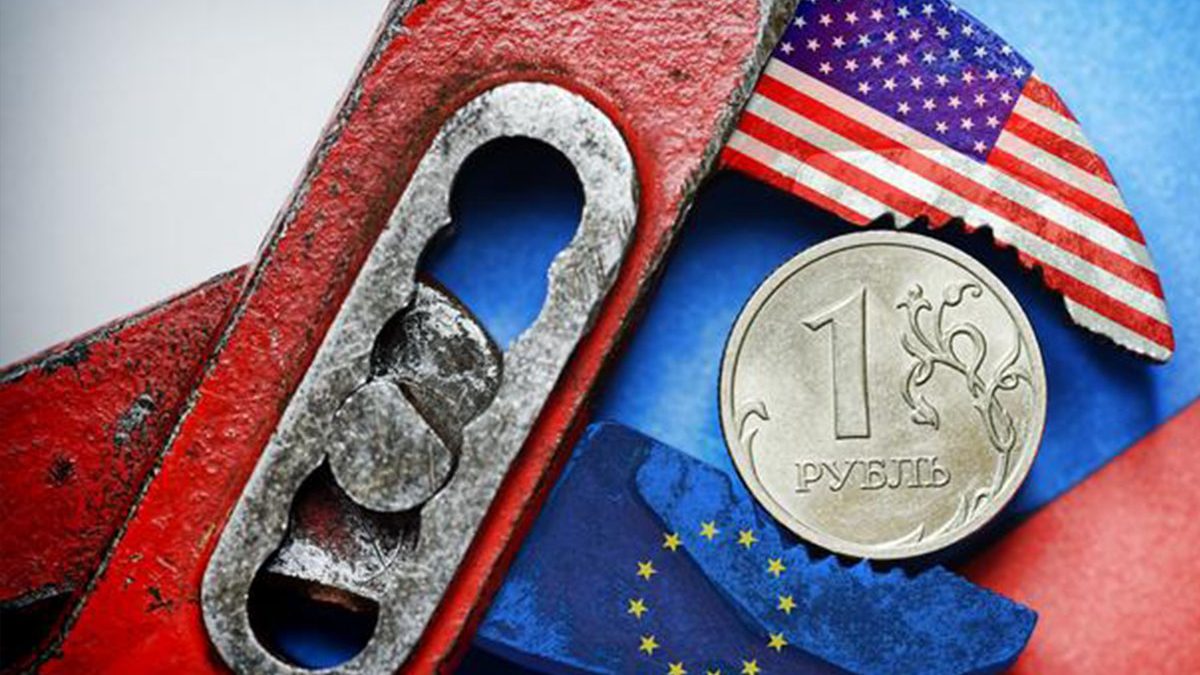
The thesis that Russia allegedly managed to effectively counteract Western sanctions is being massively circulated by Russian authorities and media. According to them, the main reasons for this success are early preparations for a massive sanctions attack and the inability of the West to isolate the planet’s largest country from global economy. Russian President Putin also resorted to manipulative statements about successfully countering sanctions, declaring that the “sanctions attack” on Russia failed.
Cyber aggression, like the sanctions attack on Russia, failed. This was stated by Russian President Vladimir Putin. “It can already be said today that cyber aggression against us, as well as the sanctions attack on Russia in general, failed,” Interfax quoted Putin as saying. The head of state said that it is necessary to radically reduce the risks when using foreign digital platforms and equipment. It is necessary to strengthen the defense of the digital space, while personal data leaks must not be allowed, the president stressed. The Russian leader said that a real war in cyberspace was unleashed against the Russian Federation. Putin said that cyberattacks on the country are carried out from different countries, and they are clearly coordinated. But Russia was ready for these attacks, Putin noted, as quoted by RIA Novosti.
https://lenta.ru/news/2022/05/21/rus/
The United States announced failure of anti-Russian sanctions. Analyst Josh Owens said Western sanctions failed to bring Russian economy to its knees because of its unique role. He wrote about this in an article for the American portal OilPrice. The US expert noted that Russia’s energy and food resources are essential for global stability. Therefore, he admitted the failure of anti-Russian sanctions.
…
In reality, the so-called “failure of the sanctions attack” looks far from what the Russian media and government officials claim. For example, according to the assessment of the Central Bank published on May 11, Russia’s GDP by the end of 2022 will fall by 8-10%. Next year, the decline will only slow down to 3%, and only in 2024 is the start of growth expected. At the end of April, the Ministry of Economic Development offered its outlook, according to which, in one of the possible scenarios, GDP in 2022 could decrease by 12.4%. The World Bank predicts a 11.2% fall. Russia’s economy ministry predicts Inflation in 2022 at the level of 17.5% despite the unprecedented strengthening of the ruble. According to the forecast released by the Central Bank, published late April, annual inflation will be in the range of 18-23%.
In addition, according to experts, most of the sanctions will come into force “later than tomorrow.” Russians will begin to experience their influence in six to nine months, while the irreversible effect will kick in somewhere in 12 to 18 months, when it becomes clear that most of the goods can no longer be produced. However, certain results of the sanctions imposed are already tangible. For example, unexpectedly quickly, Russia ran out of car parts, most medicines, and female hygiene products, and almost 35% of the products that the Russian Federation imported. Therefore, the decent well-being of citizens, which was promised by Russian authorities, is gone. Also, the Russians have already lost access to international capital markets and what the government has always been so proud of – convertibility of the ruble. The prices of products for the most vulnerable strata are rising most rapidly. The Russian authorities have already recalculated the consumer basket to hide this rapid hike, and most likely will do it again. So the ruble exchange rate at the moment does not reflect reality. A further result of the sanctions will be a significant rollback of the Russian economy to a more primitive level. Jobs that form a high added value will not be in demand in Russia under the new conditions, and the people who were engaged in these professions will lose their jobs, including advertisers, financial analysts, IT experts, and service workers. In addition, sanctions work not only directly, because there are also so-called “carpet” sanctions. Many countries and businesses choose not to deal with “dirty” Russian money and companies. Even before the sanctions hit Russian oligarchs, many foreign banks stopped serving Russians abroad and limited access to deposits, which will also yield results over time.